Training tomorrow’s CSIs: New lab at KU Edwards Campus boosts Kansas City’s forensic workforce
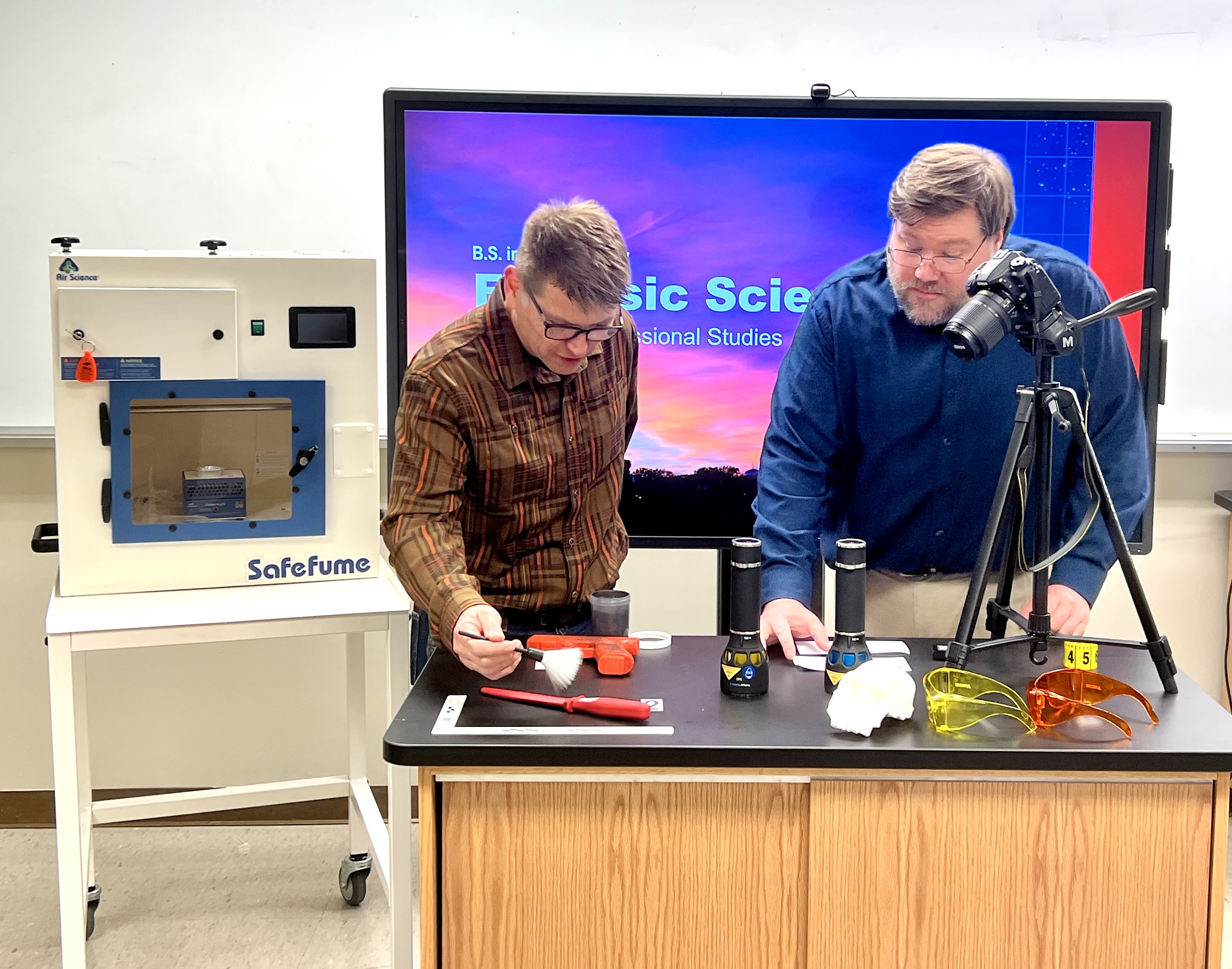
Most of us discovered forensic science while watching investigators dust for fingerprints or re-create crime scenes on hit TV shows or movies. At KU Edwards Campus (KUEC), a new Forensic Science minor and hands-on lab will enable students step beyond the screen and into a fully equipped space where they learn how evidence is collected, analyzed, and presented in court.
Regional and local Kansas City law enforcement agencies rely on scientists who can interpret complex evidence, including DNA profiles, toxicology reports, fingerprints, and ballistics. This spring, the KU School of Professional Studies (SPS) began offering the minor in Forensic Science as part of its Bachelor of Science in Biotechnology program to meet that need, providing students with rigorous scientific training that connects directly to real cases.
From concept to crime scene lab
Brendan Mattingly, biotechnology program director, collaborated with industry experts and colleagues in the KU Criminal Justice program to design the new curriculum and forensic science training lab at the Edwards Campus.
“If students want to get a job working in a real lab like the popular dramatized ‘CSI’ shows, they need to be science majors first and forensic analysts second,” Mattingly said.
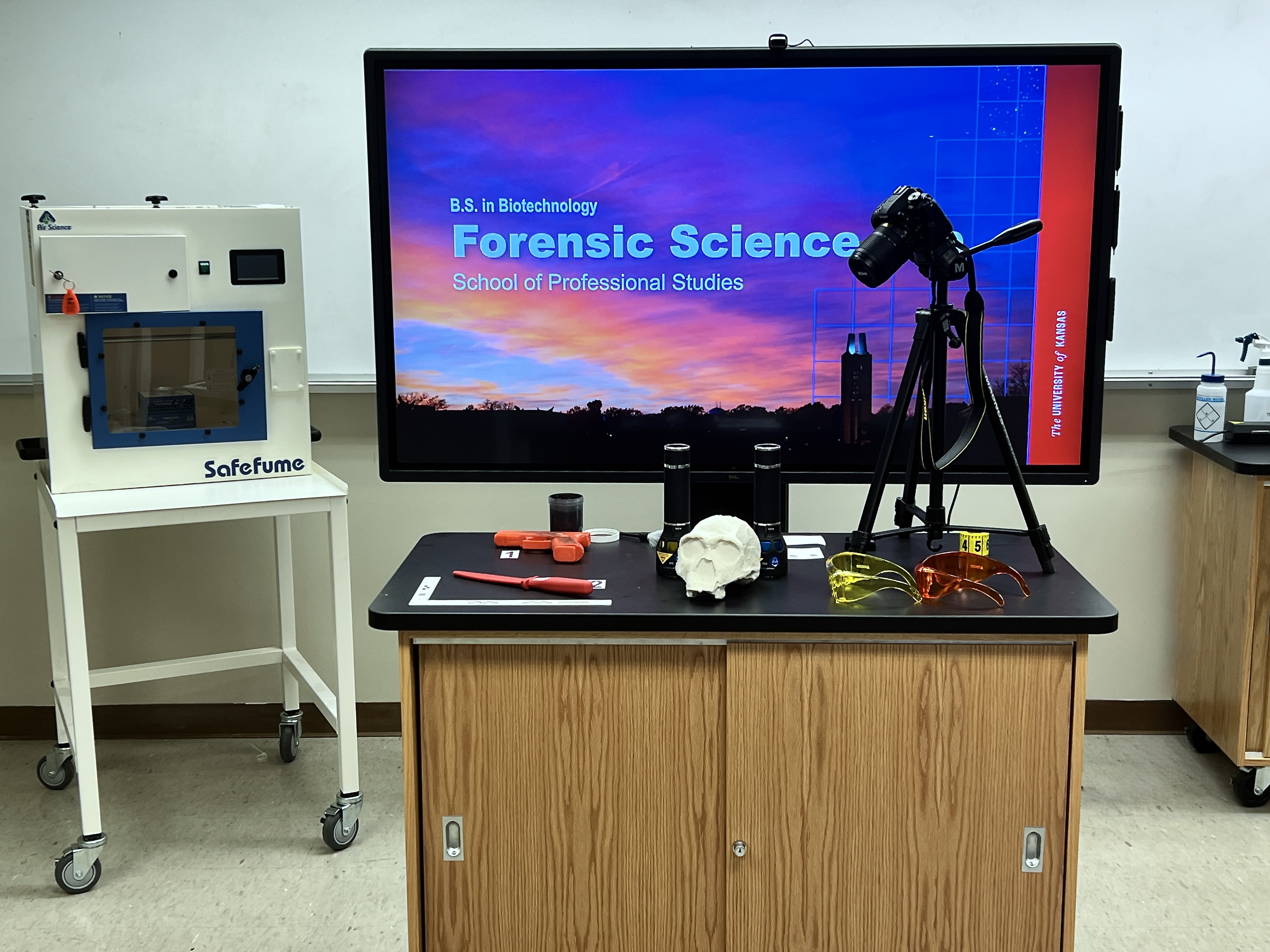
He noted KUEC already had several well-equipped labs focused on other areas of science, such as molecular biology, but lacked specialized equipment for forensic science training.
According to Mattingly, the region is a powerhouse of biotechnology in medical therapeutics, research, and health care for both animals and humans, but there has been far less focus on the science needed to support law enforcement, post-mortem care, and crime victims.
KUEC aims to change that. It is creating a specialized learning environment built around two connected spaces: the lab, which will house most of the technical equipment and bench space for hands-on research, and a crime scene staging room, where students will collect and analyze evidence.
A focus on hands-on practical skills
Students pursuing the Forensic Science minor will learn comprehensive collection and lab analysis of fingerprint and trade evidence; ballistics; basic forensic pathology; anthropology; forensic biology; chemistry and toxicology; DNA and genetic testing; and explosives and controlled substances.
An “Evidence Handling and Testimony in the Courts” course emphasizes ethics, chain of custody, and how to communicate complex scientific work clearly as an expert witness.
“The vision is to provide a space where Biotechnology students — or any student interested in science or with a science background — can apply their core scientific skills to help solve crimes, support justice and make their communities better places to live,” Mattingly said.
Investing in a critical workforce need
JCERT provided funding for the critical lab equipment to turn this vision into reality.
“Without the right equipment, this minor wouldn’t provide students with the hands-on experience they need,” Mattingly said.
JCERT’s investment also strengthens KUEC’s connections across Johnson County. The lab and minor create new collaborative pathways between the Biotechnology and Criminal Justice programs and partners such as the Johnson County Sheriff’s Office criminalistics lab.
The Biotechnology program allows students to pair a strong natural sciences major with the Forensic Science or one of two other career-focused minors – Pre-Health Professions, which prepares students for medical or other professional health schools; and Discovery and Innovation, which trains students for direct entry into local biotech industry positions.
“What sets our program apart from others is the focus on setting up students to be successful applicants to accredited forensic labs,” Mattingly said.
Cracking the case to prepare future forensic scientists
As the lab and curriculum grow, KUEC could add specialized electives in areas such as digital forensics, forensic anthropology, or forensic pathology for students interested in becoming medical examiners or coroners. The lab is well-positioned as a hub for forensic science locally and throughout the region.
The Bachelor of Science in Biotechnology is a transfer-friendly, in-person program at the KU Edwards Campus in Overland Park. Students generally have completed most of their freshman and sophomore coursework or earned an associate’s degree and then enter the program as a junior to complete a four-year bachelor’s degree.
The School of Professional Studies and KUEC strives to be responsive to and supportive of the greater Kansas City metro area by supporting students from all walks of life and serving as a valuable partner to local educational institutions, companies, government and the public.
For Mattingly, that work is personal.
“My greatest motivation and satisfaction from my 15 years of teaching with KU come from helping students achieve their goals,” Mattingly said. “The Forensic Science lab is doubly energizing because it not only opens a pathway that better serves students interested in the field, but it also gives me a chance to increase my breadth of experience as a scientist and educator by allowing me to use my talents with something new and exciting.”
Learn more about the Biotechnology degree and Forensic science minor.