Who Owns a Discovery? KU Biotechnology Students Explore the Future of Scientific Innovation
Breakthrough scientific discoveries can change the world. But before a new therapy, vaccine, or diagnostic tool reaches patients, another crucial step must happen first: the discovery must be protected—a safeguard that makes it possible to attract the massive investment required to test and approve new medicines.
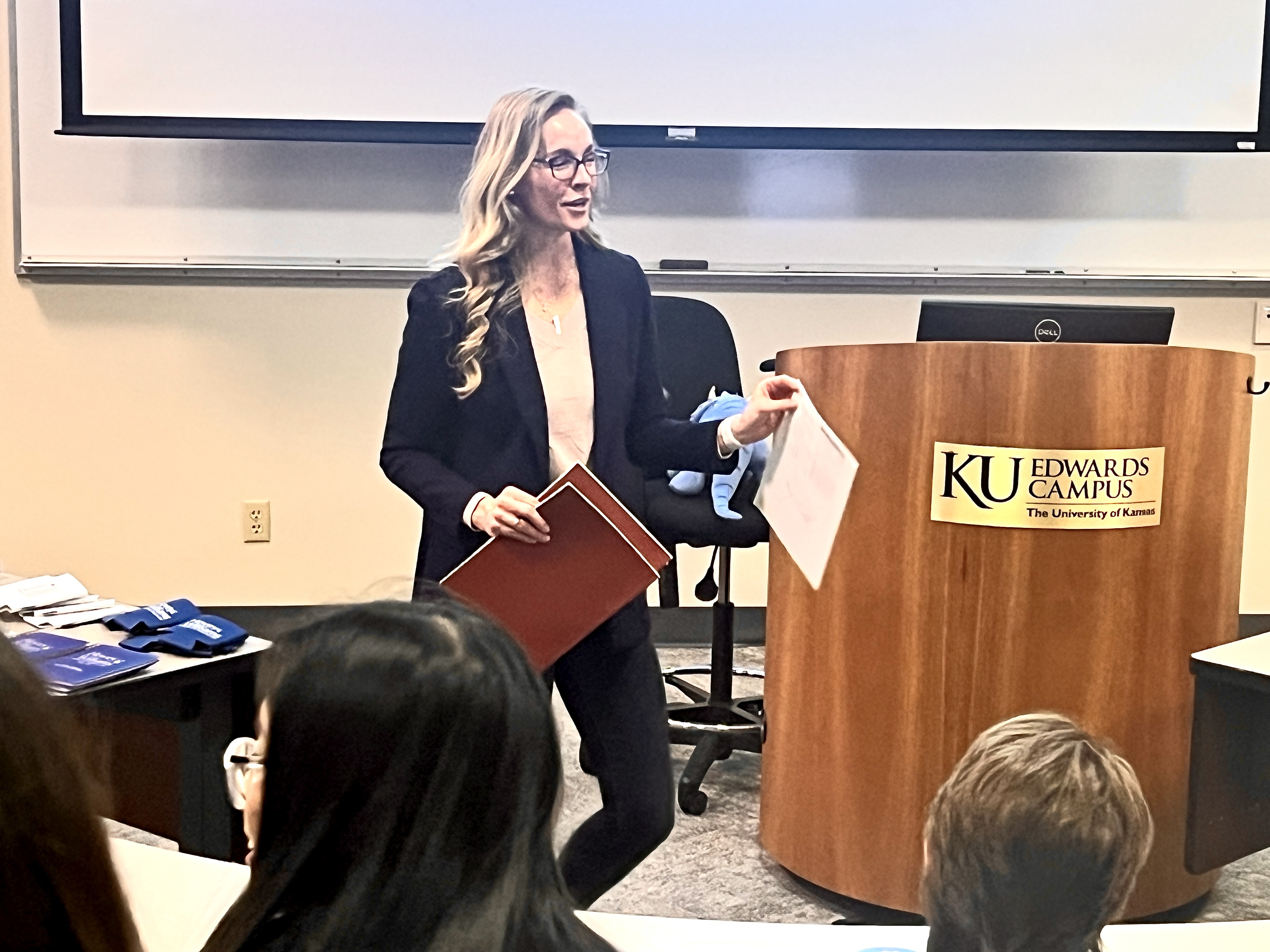
For students in the biotechnology program at the KU Edwards Campus, understanding how innovation moves from the laboratory to the real-world means learning not only how to make discoveries—but also how those discoveries are protected. Recently, the biotechnology students heard from an expert about the legal process required.
From Lab Bench to Legal Protection
Cook emphasized the practical realities scientists must consider long before filing a patent. Maintaining detailed lab notebooks, documenting experimental processes, and carefully managing when and how discoveries are shared with others can make the difference between securing protection and losing it. For researchers working on potentially patentable findings, timing and documentation are critical.
Student engagement reflected the growing intersection between science, law, and business. Questions ranged from patenting novel proteins and biological processes to how the U.S. Patent and Trademark Office is addressing emerging issues surrounding artificial intelligence and inventorship.
AI, Authorship, and the Future of Innovation
One of the most compelling discussions centered on AI-generated discoveries. Current U.S. policy maintains that artificial intelligence itself cannot hold a copyright or patent. While that position reinforces the legal requirement for human inventorship, it also raises important questions for fields such as protein engineering and molecular design—areas where computational systems are becoming powerful engines of discovery, extending human cognition into the vast landscape of biological possibility. For now, creative research—and the legal rights that follow—remain firmly in human hands, including those of KU Edwards biotechnology students.
As these emerging scientists continue pushing the boundaries of discovery, they are also gaining the knowledge needed to protect and translate their innovations into meaningful impact. Because in biotechnology, invention is only the beginning.