KU Environmental Assessment Students Take Learning Into the Field
Getting out in the field is an invaluable learning experience and a critical part of the curriculum in Urban Natural Resources Management, one of the courses offered in KU’s JCERT-supported Environmental Assessment graduate program. The first of two required field site visits occurred recently and was packed with informative stops and learning opportunities.
“Our site visits allow students to see how the concepts they study are applied in real-world urban natural resources management projects, from the regional leaders doing this important work,” said Scott Schulte, KU associate professor of the practice.
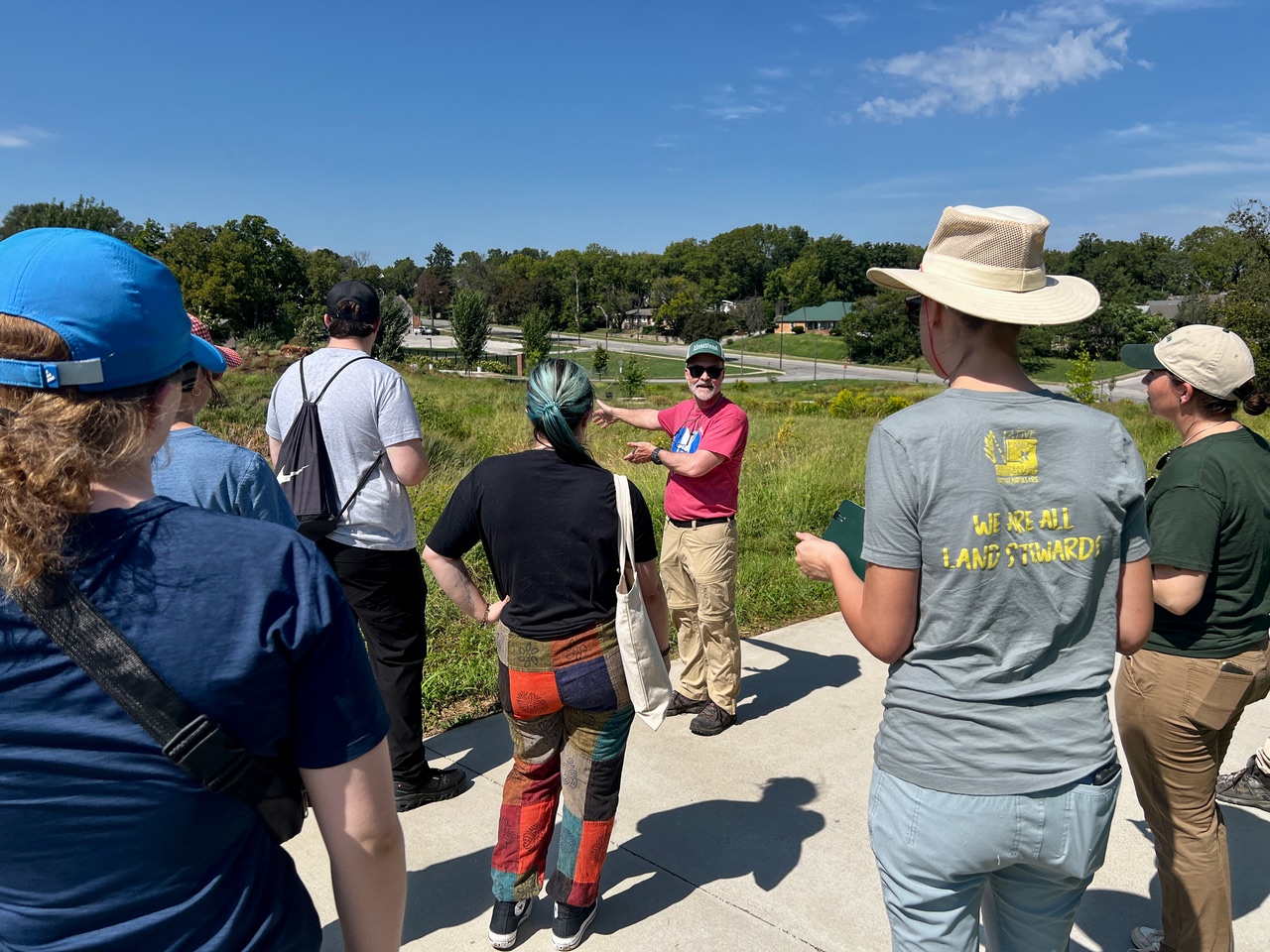
First up was a quick stop at the VA Medical Center and Linwood Green Park, where Schulte showed off a project he worked on as a designer and project manager. Completed in 2020, the project created a series of natural ponds to absorb and filter stormwater from the medical center campus, reducing overflows from the city’s aging sewer system while helping sustain plants, trees and natural habitats and creating a beautiful landscape.
“Cities increasingly are requiring development and infrastructure to employ green infrastructure to manage stormwater more naturally for flood reduction, stream protection, and water quality treatment,” Schulte said. “Our students are learning when, why, and how to integrate and manage these engineered ‘natural’ features in urban landscapes.”
At the second stop, students learned that urban forestry is as much about serving residents and communities as it is about the science and practice of growing, managing, and caring for forests and trees.
Joe Wheelock, Heartland Tree Alliance program manager at Bridging the Gap, the region’s premier urban forestry organization, described trees as “pieces of living infrastructure” and discussed their environmental benefits. Areas with less tree canopy tend to be significantly hotter than areas with more trees, which can affect residents’ health. Bridging the Gap has an ongoing, extensive tree-planting effort in parks and neighborhoods throughout the city, focusing on areas where trees are most needed.
Wheelock led the group on a walk through a neighborhood with small homes and very few healthy trees in sight, and then on to a park at the end of the block where Bridging the Gap had planted dozens of trees this year. Someday, those trees will provide a cool place for residents to gather.
Wheelock also shared information about Bridging the Gap’s extensive recycling program, which keeps everything from plastics and glass to scrap metal and mattresses out of landfills.
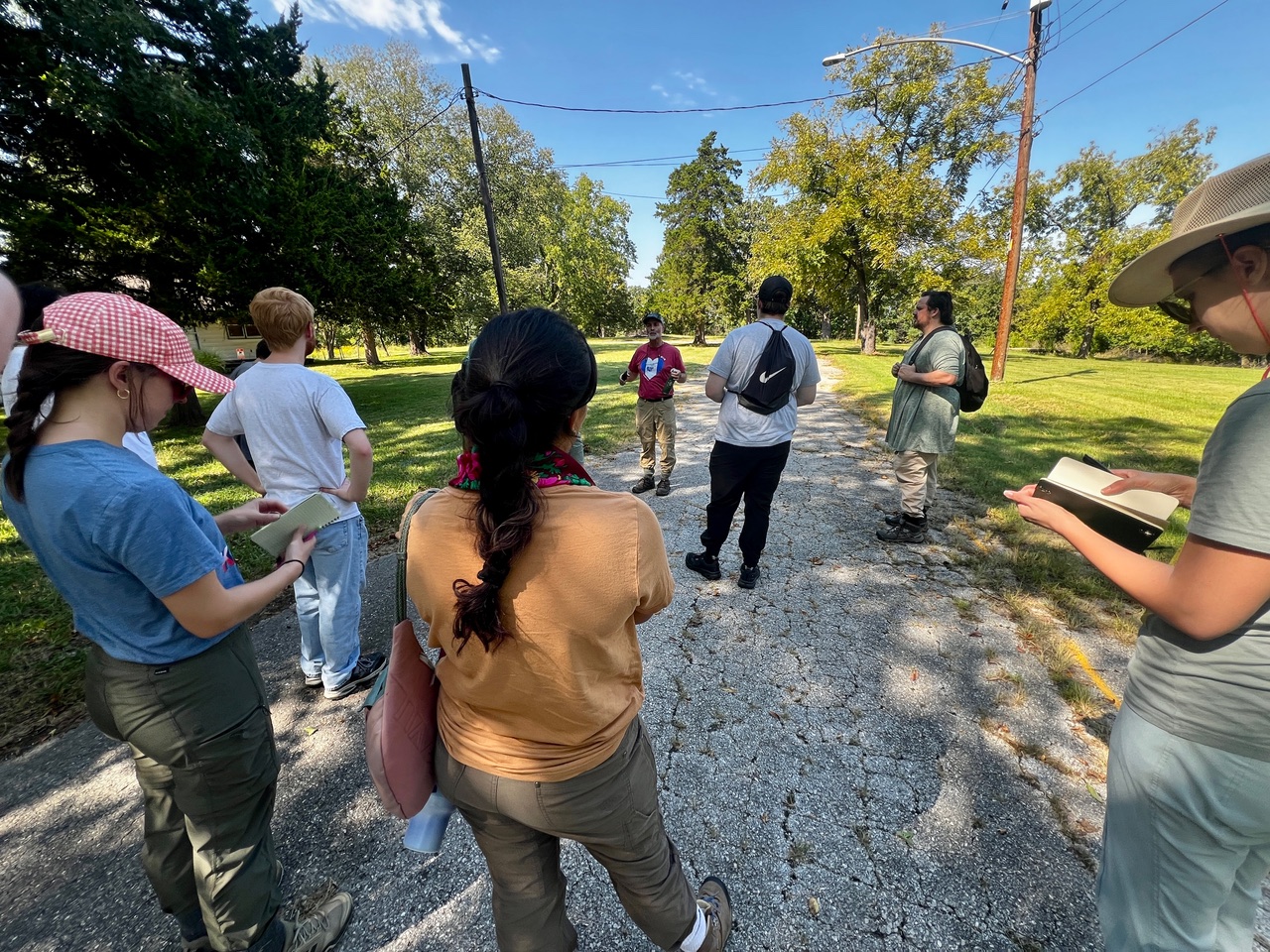
The final stop of the day was Heartland Overlook Preserve, where students explored the practices and strategies required to transform a degraded, 40-acre woodland overlooking the Blue River in south Kansas City into a nature preserve. The site is managed by Heartland Conservation Alliance, a regional land trust, with ecological restoration continuing through a collaborative effort involving several nonprofit organizations and dozens of community volunteers.
The preserve is now publicly accessible and open to anyone who wants to explore, hike or mountain bike.
Throughout the long afternoon field trip, and despite temperatures reaching 97 degrees, students soaked in their surroundings and the new information shared by Schulte and Wheelock. Many took copious notes as they listened intently.
As student Kateri Cassube noted, technical expertise is an important aspect of site management and planning, but there’s a lot to be learned on the ground that can’t be identified on Google Earth or from a field guide alone.
“During our field visit, we had time to observe both native and invasive species and discuss their cascading impact on both the ecological environment and human health,” she said.
No doubt, the students returned home inspired by the impact they can have on the world through their chosen field of study.
Frequently asked questions
What is the field site visit in KU’s Environmental Assessment program?
It is a required, in-person visit that is part of the Urban Natural Resources Management course, one of the courses in KU’s Environmental Assessment graduate program. Students visit regional projects and meet the leaders doing the work, so they can see how the concepts they study are applied in real-world urban natural resources management. Students complete two required field site visits, and the first took place recently.
What did students see on the first field visit?
The group made three stops in the Kansas City area. At the VA Medical Center and Linwood Green Park, they saw a 2020 project of natural ponds that absorb and filter stormwater and reduce overflows from the city’s aging sewer system. They then learned about urban forestry and tree planting with Bridging the Gap. The final stop was Heartland Overlook Preserve, a 40-acre woodland overlooking the Blue River that is being restored as a nature preserve.
Why does field experience matter for environmental assessment students?
Technical expertise is an important part of site management and planning, but much of what students need to know can’t be identified on Google Earth or from a field guide alone. On site, students observed native and invasive species and discussed their impact on both the ecological environment and human health, and they heard directly from regional leaders about how green infrastructure and urban forestry are managed in practice.
Who leads the Urban Natural Resources Management field visits?
Scott Schulte, KU associate professor of the practice, led the visits and shared a project he worked on as a designer and project manager. Joe Wheelock, Heartland Tree Alliance program manager at Bridging the Gap, led the urban forestry stop.